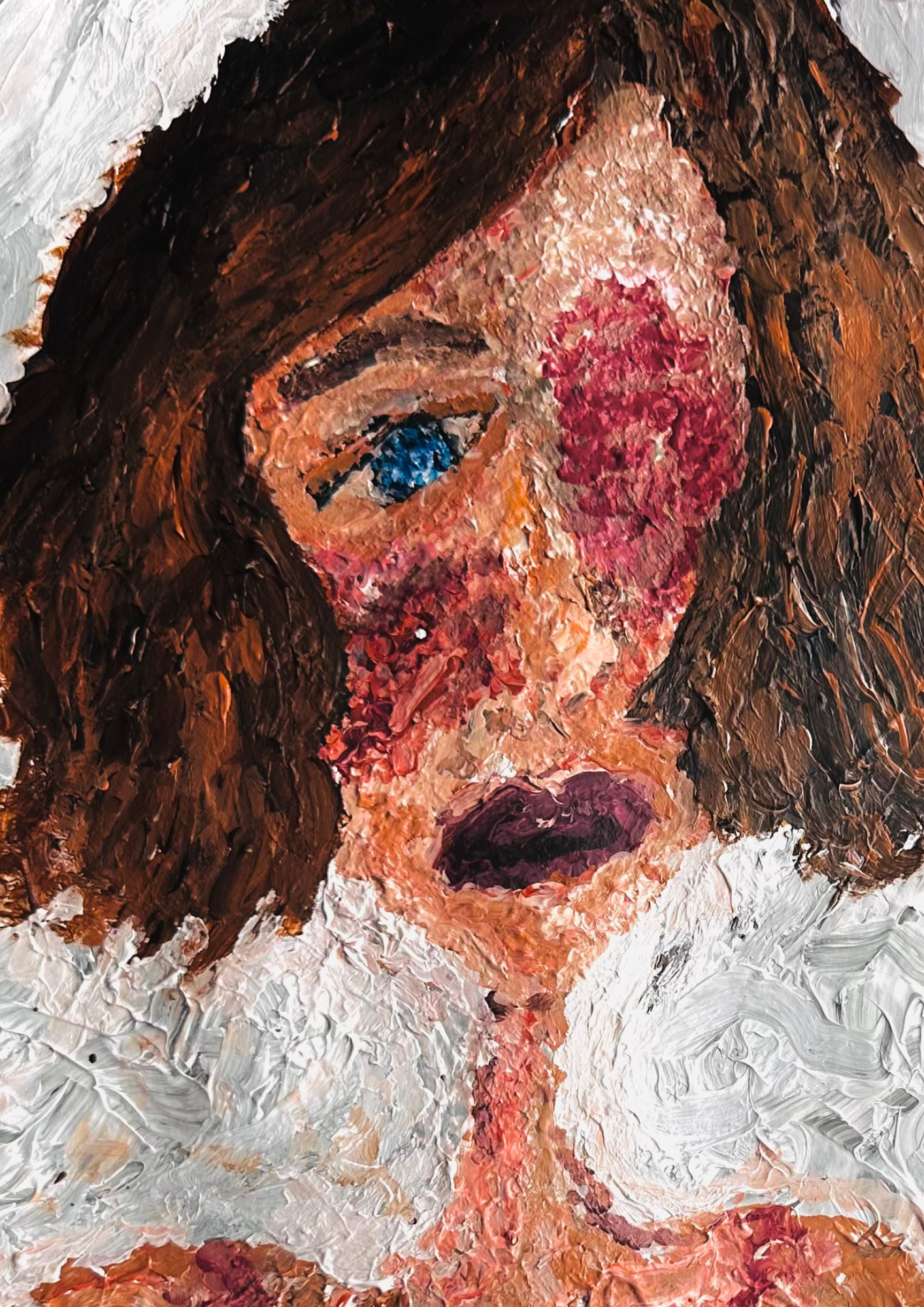
Violence is not always loud. It does not always bruise or break skin. Some of the most enduring forms arrive through language, quiet, ordinary phrases that correct, shame, or override a person’s sense of self.
Wash your eyes out is a metaphor for when we distrust what we see, question our own perception, and what happens when we submit ourselves to someone else’s external authority of who they think we are.
This kind of violence is difficult to name because it hides inside normality. It wears the language of guidance or care, and because it leaves no visible mark, it is often dismissed, even by the person who carries it.
Over time, this silencing becomes internalised, repeating itself long after the original words have disappeared.
Oh Lily holds this moment of interruption. Not as an accusation, and not as a story of damage, but as a record of what happens when language crosses an invisible threshold, when words stop communicating and begin to colonise.
This is the kind of violence that robs without announcing itself. It does not destroy outright; it disorients. And in doing so, it quietly shapes who we believe ourselves to be.
This piece of art was created in a time within a wider body of art exploring similar themes.